Devon in 1642: A County Divided
When war broke out between King Charles I and Parliament in August 1642, Devon — like most of England — found itself divided. The county's gentry were split between loyalty to the Crown and support for parliamentary government. Towns, with their trading interests and Puritan congregations, tended toward Parliament. Much of the rural nobility and the Cornish-influenced north of the county leaned Royalist.
The city of Exeter initially declared for Parliament, then changed sides when a Royalist army under the Marquess of Hertford marched through the county in 1642. Plymouth, by contrast, remained resolutely Parliamentarian throughout the entire war — a decision that would have enormous strategic consequences.
The Siege of Plymouth (1642–1646)
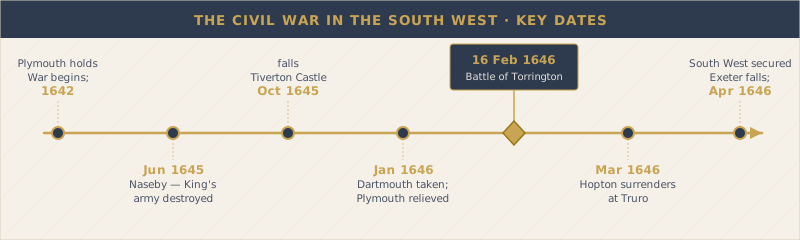
Plymouth's resistance became one of the defining stories of the Civil War in the South West. The town, which held a vital deep-water harbour, declared for Parliament and endured a Royalist siege that lasted from 1642 until January 1646 — over three years. Its garrison and civilian population held out through repeated assaults, blockades, and severe food shortages.
"Plymouth hath endured above three years' siege, suffering all extremities of hunger and want, yet never once inclined to yield — a resolution not to be equalled in this war."
The siege tied down thousands of Royalist troops who might otherwise have been deployed elsewhere. Plymouth's eventual relief by Parliamentarian forces in January 1646 — shortly before Torrington — was a significant blow to Royalist morale and logistics in the region.
The New Model Army Advances West
The creation of Parliament's New Model Army in 1645 transformed the military balance of the war. Professional, disciplined, and led on merit, it had destroyed the King's main field army at Naseby in June 1645. By autumn, Sir Thomas Fairfax turned its attention to the South West.
The campaign was systematic and relentless. Tiverton Castle fell in October 1645 after its church was struck by a cannonball that ignited the drawbridge chain. Dartmouth was taken by storm in January 1646. Garrison after garrison either surrendered or was overcome as the New Model Army swept through the region.
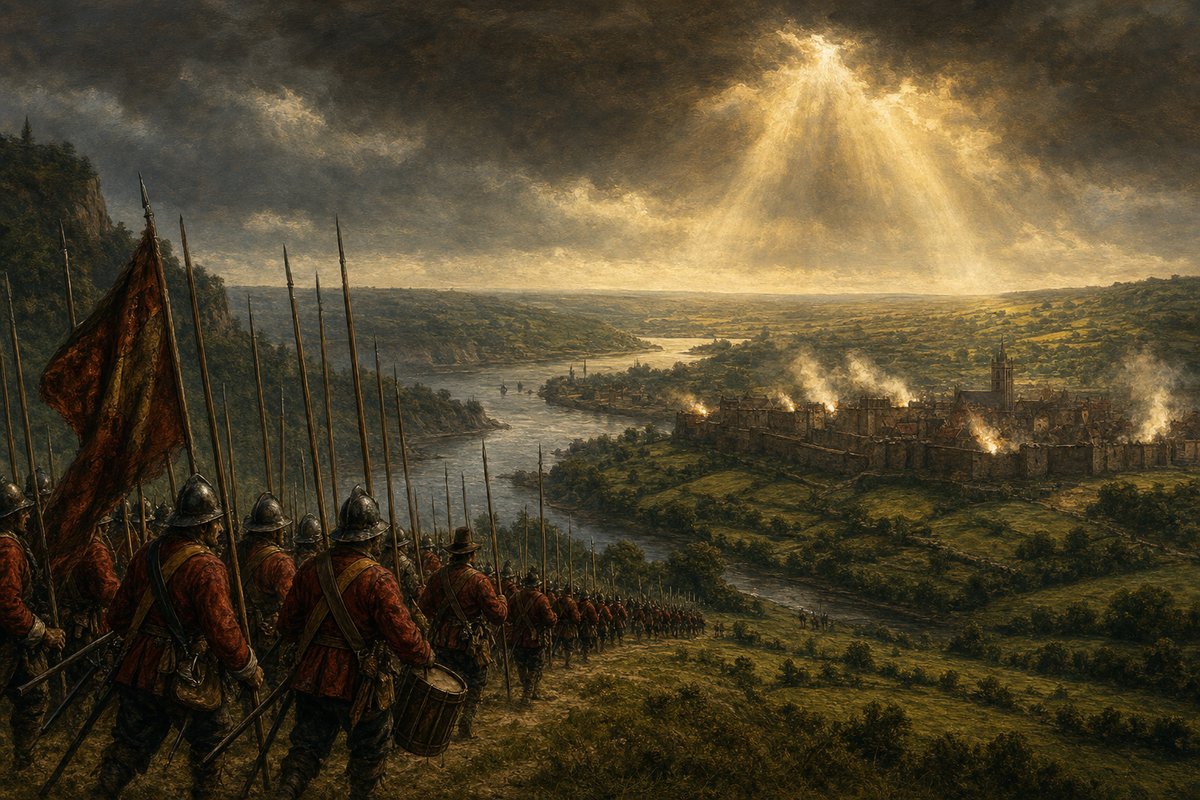
The Parliamentary Campaign in Devon, 1645–1646
Lord Ralph Hopton, the most capable Royalist commander remaining in the South West, concentrated his forces at Great Torrington. His position — on a hilltop commanding the Torridge valley — was strong, but his army was worn down by the previous months of retreat and defeat.
Torrington and the End of the War
The Battle of Torrington on 16 February 1646 ended what remained of Royalist resistance in the South West. The explosion of the church powder store, the rout of Hopton's army, and the subsequent retreat into Cornwall brought organised Royalist military power in the region to an end.
Hopton surrendered at Truro in March 1646. Exeter, which had been Royalist for most of the war, capitulated to Fairfax in April. By May 1646, when Charles I surrendered to the Scottish army, Devon had been entirely under Parliamentary control for months.
Frequently Asked Questions
Was Devon Royalist or Parliamentarian during the Civil War?
Devon was broadly contested territory. The county gentry were divided, but key urban centres such as Exeter and Plymouth became strongly Parliamentarian. Much of the rural county and its nobility leaned Royalist, particularly in the north and east. Plymouth held out for Parliament throughout the war in a famous siege.
↑ Read more: Devon in 1642 — A County Divided
How long was Plymouth besieged during the Civil War?
Plymouth endured one of the longest sieges of the Civil War, holding out for Parliament from 1642 until January 1646 — over three years. The town's determined resistance tied down significant Royalist forces and was a major strategic factor in the South West.
↑ Read more: The Siege of Plymouth
When did Exeter fall during the Civil War?
Exeter, which had been held by the Royalists since 1642, fell to the New Model Army under Fairfax in April 1646, shortly after the Battle of Torrington. Its surrender marked the end of significant Royalist resistance in Devon.
↑ Read more: Torrington and the End of the War
What was the New Model Army?
The New Model Army was the professional standing army created by Parliament in 1645. Unlike earlier Civil War forces, it was centrally organised, regularly paid, and promoted officers on merit rather than social rank. Under Fairfax and Cromwell, it became the decisive military force of the war. For the wider social context, see life in 17th-century England.
↑ Read more: The New Model Army Advances West
Which other battles took place in Devon during the Civil War?
Devon saw numerous engagements. Significant actions included the siege of Plymouth (1642–46), the fall of Tiverton Castle (October 1645), the capture of Dartmouth (January 1646), and the Battle of Torrington (February 1646). Smaller skirmishes and garrison actions occurred across the county throughout the conflict.
↑ Read more: The New Model Army Advances West
Why was the South West important to the Royalist cause?
The South West — Devon, Cornwall, and Somerset — was a vital Royalist recruiting ground and supplied significant numbers of infantry to the King's armies. Cornwall in particular was strongly Royalist. Control of the region's ports also had strategic implications for any potential foreign assistance to the Crown.
↑ Read more: Devon in 1642 — A County Divided
How did the Civil War end in the South West?
The end came rapidly after Torrington. Hopton's defeated army retreated into Cornwall, where it surrendered at Truro in March 1646. Exeter capitulated in April. By the late spring of 1646, Parliament controlled the entire South West, and Charles I had surrendered to the Scots.
↑ Read more: Torrington and the End of the War
Who won the English Civil War in Devon?
Parliament won. Although Devon began the war divided and much of the county was held by Royalist forces, the New Model Army under Sir Thomas Fairfax systematically reduced Royalist garrisons through 1645–46. The decisive Battle of Torrington in February 1646 broke the last Royalist field army, and the whole county was under Parliamentary control by the spring.
↑ Read more: The New Model Army Advances West
Was Cornwall Royalist during the Civil War?
Yes. Cornwall was one of the most strongly Royalist regions in England and supplied large numbers of infantry to the King's armies. It was into Cornwall that Hopton's defeated forces retreated after Torrington, before finally surrendering at Truro in March 1646.
↑ Read more: Torrington and the End of the War
Can you visit English Civil War sites in Devon today?
Yes. Great Torrington marks the site of the 1646 battle, including the rebuilt St Michael's Church where the gunpowder store exploded. Plymouth, Exeter, Dartmouth, and Tiverton all retain features and museum collections relating to their Civil War sieges and the wider campaign across the South West.