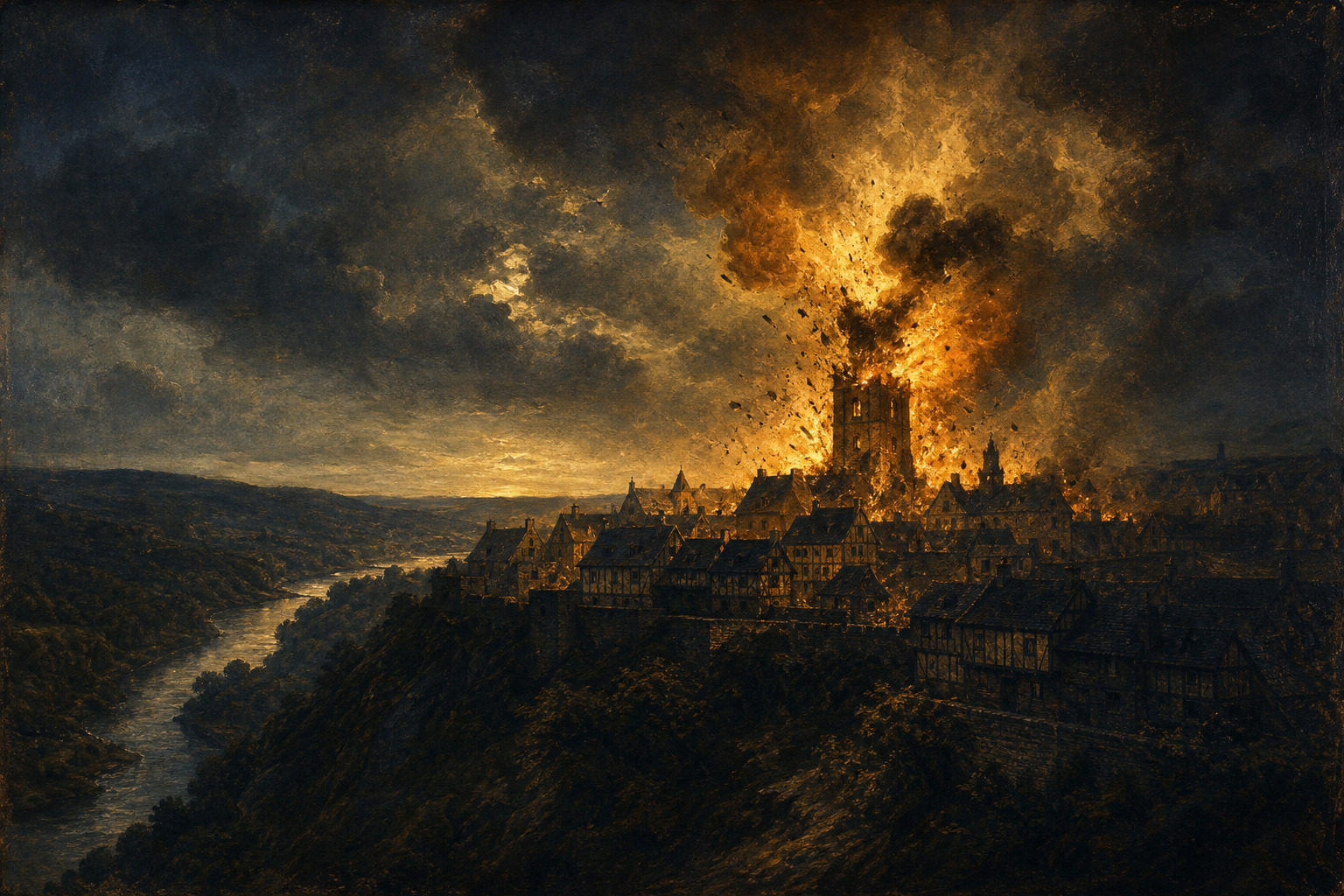
On the night of 16 February 1646, Royalist and Parliamentarian forces clashed in the narrow streets of Great Torrington, Devon. The battle ended in catastrophe when the town's church — used as a powder magazine — exploded, killing hundreds. It marked the final collapse of Royalist resistance in the South West of England.
Lord Hopton's Royalist army had chosen Torrington for its strong hilltop position above the River Torridge. Fairfax's New Model Army pressed the attack regardless — and when the church erupted, the blast was seen for miles. Hopton fled westward. Within weeks, the last Royalist army in England had surrendered.
How the English Civil War came to Devon — and ended there
Devon splits — Plymouth and Exeter declare for Parliament, while much of the rural county sides with the Crown.
Civil War in Devon →Lord Hopton wins at Stratton and Lansdown, dominating the South West. Royalist control of Devon seems secure.
The commanders →Parliament's New Model Army is created — disciplined, professional, red-coated. It destroys the King's main field army at Naseby.
The armies of the war →Tiverton falls in October, Dartmouth in January 1646. Hopton retreats to Great Torrington for a final stand.
Great Torrington →Fairfax attacks at night. The church explodes. Hopton flees. The Civil War in the South West is over.
Read the account →"The storming of Torrington was a night action of remarkable ferocity, ending in the spectacular destruction of the church and the final ruin of the Royalist cause in the West."
— English Civil War historiography